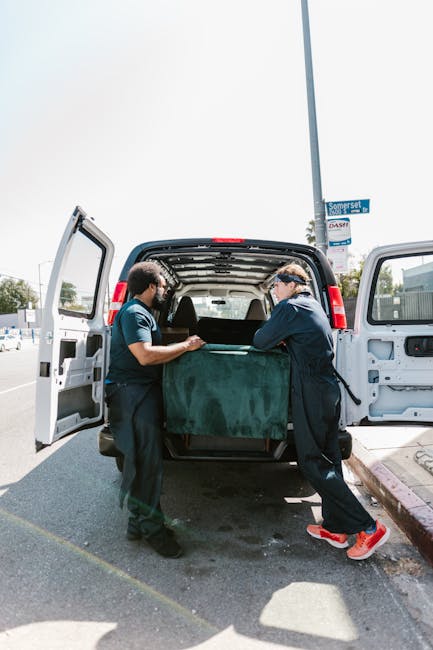
Efficient loading techniques professional removal crews use
Loading a van or removals truck looks simple from the outside. Boxes go in, furniture follows, and off you go. In real life, though, the difference between a smooth move and a stressful one usually comes down to the loading plan. The efficient loading techniques professional removal crews use are not flashy. They are methodical, safety-minded, and built to protect your belongings while making the whole job faster. If you have ever watched a crew fit a surprising amount into a vehicle without the usual shuffling, that is skill, not luck.
This guide breaks down how professional removal teams load items properly, why it matters, what the process looks like in practice, and how you can judge whether a mover is working in a sensible, efficient way. It also covers common mistakes, useful tools, compliance basics, and a realistic example of a well-run load. No jargon for the sake of it. Just practical, useful detail.
Why efficient loading matters
Loading is where many delays begin. A crew can arrive on time, pack well, and still lose an hour or more if the vehicle is loaded in the wrong order. Heavy items may need to come back out. Fragile items may get crushed. Narrow hallways can become blocked. And once a truck is loaded badly, the driving part becomes riskier too because unstable cargo shifts during transit.
Professional loading is about more than fitting everything in. It is about balancing weight, protecting surfaces, creating a stable stack, and keeping the job moving. That matters whether you are moving a one-bedroom flat, a family house, or a large office. It also matters if you are booking a man and van service for a smaller load or arranging a bigger vehicle through removal truck hire. The principles are similar; the scale changes.
To be fair, this is the part of moving that most people only notice when it goes wrong. A wobbling wardrobe, scratched dining table, or box of files buried under soft furnishings can turn a simple day into a very long one. Efficient loading helps prevent that. It saves time, but it also saves your nerves.
How professional loading works
Professional crews usually load in layers and zones. Think of the vehicle as a puzzle with a weight limit, not a bin to be filled from the front door backwards. The team starts by planning what should go in first, where the heaviest items sit, and how lighter goods can be used to lock everything in place.
In practice, the process often looks like this:
- Assess the load before lifting anything. The crew checks item sizes, shapes, weight, fragility, and access at both properties.
- Load the heaviest and most stable items first. Appliances, wardrobes, sofas, and dismantled bed frames usually go in early so they can form a secure base.
- Build from the floor up. Boxes, cushions, and lighter furniture are used to fill voids and stop movement.
- Protect and tie down. Blankets, straps, and corner protection reduce rubbing and shifting.
- Keep an eye on balance. Weight is distributed so the load is not lopsided or too rear-heavy.
There is a rhythm to it. Items move from the property to the vehicle in a deliberate sequence, and the load is shaped as it goes. A good crew is always thinking two or three steps ahead. If a chest of drawers is going in next, what will sit on top? If the next stop is a tight staircase, what should stay near the exit? That kind of thinking saves a lot of awkward lifting later.
For larger business moves, especially those covered by commercial moves or office relocation services, the loading plan gets even more structured. Office chairs, monitors, archive boxes, and desks all need different handling, and the crew often groups items by department or destination room. Simple idea, big payoff.
Key benefits and practical advantages
When loading is done well, the benefits show up in several ways, not just in speed. In our experience, people usually notice the time saving first, but the real value goes deeper than that.
- Fewer breakages: Good loading reduces pressure points, crushing, and movement in transit.
- Better space use: The vehicle fits more securely, often with fewer trips.
- Safer lifting: Clear loading order means the crew is not constantly rehandling heavy items.
- Lower stress: A tidy load is easier to unload in the right order at the new address.
- Less delay on the day: That matters if you are working around keys, parking, lift access, or a building slot.
There is also a knock-on effect on the rest of the move. If a vehicle is loaded efficiently, the unload is calmer. Rooms are easier to place into. The crew does not need to dig through a mountain of boxes to reach the kettle, which sounds trivial until you are standing in an empty kitchen at 6 p.m. and someone is asking where the mugs are. Tragic, really.
Efficient loading also supports better customer experience for households using home moves or families booking house removalists. A smoother load often means better timing, and timing is half the battle on moving day.
| Loading approach | What it usually looks like | Strengths | Weak points |
|---|---|---|---|
| Random stacking | Items are placed wherever space appears | Quick to start | Breakage risk, wasted space, unstable load |
| Room-by-room loading | Items from one area are grouped together | Better unloading order, easier tracking | Needs discipline and good labelling |
| Weighted layer loading | Heavy items form the base, lighter items fill gaps | Stable, efficient, protects items | Requires experience and planning |
Who this is for and when it makes sense
This topic matters to almost anyone moving, but it is especially useful if your move has tight timing, awkward access, or valuable items. If you are moving from a flat with no lift, handling bulky furniture, or coordinating a commercial relocation, loading technique can make a surprisingly big difference.
It is also relevant if you are comparing service levels. Some people only need a straightforward uplift with a man with van arrangement for a few larger items. Others need a full crew and a larger vehicle. Either way, you should expect the same basic professionalism: sensible loading order, care for items, and clear handling of the vehicle's space.
As a rule of thumb, it makes most sense to think about loading technique when:
- you have fragile or awkwardly shaped furniture
- you need the move finished in one run if possible
- there are stairs, tight turns, or parking limits
- you are moving office equipment, stock, or files
- you want to reduce risk to walls, floors, and door frames
In smaller jobs, such as furniture pick up, the principle still applies. Even one heavy sideboard can be badly damaged if it is not braced properly. It does not need to be a whole house move for loading skill to matter.
Step-by-step guidance
If you want to understand how crews load efficiently, it helps to break it into a simple sequence. This is the kind of process a professional team may adapt depending on the vehicle, the access, and the items involved, but the logic stays the same.
1. Prepare the route
The crew checks the route from the property to the vehicle. That means looking at stairs, lifts, narrow paths, low ceilings, and any tricky corners. If the path is long, the team may stage items near the exit so they can keep moving without clogging doorways. Little things, but they matter.
2. Separate items by weight and fragility
Heavy and rigid items are usually grouped together. Light, crushable, or delicate items are kept apart. This prevents the classic mistake of dropping a heavy box on top of a lamp or mixing books with soft furnishings in a way that creates an unstable stack.
3. Place anchor items first
Anchor items are the big, stable pieces that shape the load. A wardrobe panel or sofa base can act like a wall inside the van. Once those are secure, smaller items can be packed around them. Think of it as building a structured wall rather than piling up shopping bags. Much less drama.
4. Fill voids carefully
Open gaps are the enemy. They allow movement, and movement causes damage. Professional crews use blankets, cushions, soft bags, and smaller boxes to fill gaps between hard edges. The aim is not just to fill space, but to stop items from sliding into each other during braking or turning.
5. Strap and secure
Once items are in position, straps help lock the load. This matters especially for taller furniture, appliances, and mixed loads. A secure load is not one that is squeezed so tightly it damages itself. It is one that stays still without pressure spots or leaning columns.
6. Keep access in mind
Good loaders leave what they need for the first unload stop near the door or tailgate. That is especially useful for office moves or multi-stop jobs. It sounds obvious, but the temptation to just pack every gap is strong. Resist it. Your future self will thank you.
Expert tips for better results
Here are the habits that separate an efficient crew from one that simply works hard. And yes, there is a difference. Hard work is good. Smart work is better.
- Use gravity, not force. Heavy items belong low and upright whenever possible. Do not fight the shape of the item.
- Match box strength to contents. Books belong in smaller, stronger boxes. Soft items can fill larger boxes without creating dangerous weight.
- Protect corners first. Most damage happens at edges and corners, not in the middle of a flat surface.
- Keep one person thinking ahead. Even in a two-person team, one crew member should be watching the overall load pattern.
- Leave breathing room for fragile items. A little space, carefully padded, is safer than forcing delicate pieces into a tight squeeze.
Another useful tip: label boxes clearly by room and priority. It helps at both ends of the move, and it supports smarter loading because the crew can place priority items where they will be easiest to access later. If you are using packing and unpacking services, this becomes even more useful because the packing system and the loading order can work together instead of against each other.
One small but common-sense observation: the best crews rarely look rushed, even when they are moving quickly. They do not waste motion. They do not repeatedly shift the same item around. They place it once, secure it, and move on. Very boring to watch, maybe. Very effective, though.
Common mistakes to avoid
Loading errors are often simple, which is exactly why they happen so often. Most are avoidable with a bit of planning and a bit of discipline.
- Loading by convenience instead of weight: Putting the nearest item in first is rarely the best option.
- Overfilling every gap: If items are wedged too tightly, they can damage each other under pressure.
- Putting fragile items under heavy ones: This sounds obvious, but it still happens.
- Ignoring load balance: A lopsided vehicle can be awkward to drive and harder to unload.
- Skipping straps or blankets: Bare furniture in a moving vehicle is asking for scratches.
- Forgetting the unload order: If the first-room items are buried, the destination becomes messy fast.
There is also a human mistake that creeps in on longer days: fatigue. After a few trips up and down stairs, people start making quicker decisions. A chair gets placed "just for now." A box sits on top of a softer bag. Then suddenly the load is a bit wonky. Professional crews keep an eye on this, because tired hands make sloppy stacks. Happens to the best of us, honestly.
Tools, resources and recommendations
Efficient loading is easier when the right equipment is available. You do not need a huge toolkit, but you do need the basics to hand.
- Removal blankets: For furniture protection and surface coverage.
- Ratchet straps or load straps: For securing larger items and limiting movement.
- Dollies and sack trucks: To move heavier items safely and reduce manual strain.
- Furniture sliders: Useful for awkward items on smooth floors, when appropriate.
- Protective wrap: Handy for softening edges and protecting doors, drawers, and drawers that like to open at the worst moment.
- Clear labels and markers: Small effort, big payoff.
For a move involving larger loads, vehicle choice matters as well. A compact vehicle can work for small flat moves, while a larger truck may suit multi-room homes or business relocations. If you are unsure what fits, a service like moving truck hire can help align vehicle size with the actual volume of goods, which is better than guessing and hoping.
If sustainability matters to you, and it should, consider how loading relates to recycling and reuse. Keep reusable wrapping materials in good condition. Separate items meant for disposal from items that can be donated, reused, or taken for responsible furniture pick-up. That sort of organisation helps the whole move feel cleaner, not just physically but mentally too. For more on that side of the work, you can look at the company's approach to recycling and sustainability.
Law, compliance, standards, and best practice
Loading technique is practical work, but it also sits within a broader safety framework. In the UK, removal crews are expected to work responsibly, use vehicles safely, and take care with manual handling. The exact legal obligations depend on the job, the vehicle, the goods, and the setting, so it is sensible to speak carefully here and avoid overclaiming.
At a minimum, good practice usually includes:
- safe manual handling and team lifting where needed
- proper vehicle weight awareness and balanced loading
- care to prevent damage to property and goods
- clear communication about fragile, heavy, or awkward items
- appropriate insurance and sensible risk management
For commercial or office work, compliance-minded loading becomes even more important because there may be IT equipment, confidential files, or business continuity deadlines involved. A crew loading office chairs can take more liberties than a crew handling servers and archiving cabinets? Not really. The answer is no, they cannot. Care, labelling, and controlled handling matter a lot more there.
It is also worth checking company policies around health and safety, insurance, and payments before booking. A good mover should be transparent about how they approach risk and what is included. If you want to review those basics, useful pages include health and safety policy, insurance and safety, and payment and security.
Options, methods, and comparison table
Not every move needs the same loading style. The right method depends on the job size, item mix, access, and time available. Here is a simple comparison of common approaches.
| Method | Best for | Pros | Trade-offs |
|---|---|---|---|
| Room-by-room loading | House moves with clear destination rooms | Easy unload, good organisation | Needs disciplined labelling and sequencing |
| Weight-first loading | Mixed furniture and boxes | Stable, protective, efficient | Requires more handling judgement |
| Priority-first loading | Jobs with early-access items or office essentials | Faster setup at destination | Must be planned carefully to avoid dead space |
| Bulk-item loading | Large furniture pick-ups or single-object transport | Simple and fast | Can be inefficient if mixed with many small items |
If your move is mostly one or two large items, a smaller service route may be enough. If it involves a full house, a fuller moving setup is more sensible. For a straightforward point-to-point job, man and van can be a good fit. For larger or heavier loads, a more substantial vehicle or hire option may be the better choice. Simple answer, but the right one usually saves money and hassle.
Case study or real-world example
Picture a typical Saturday morning move from a two-bedroom flat in a busy part of town. The lift is small, parking is awkward, and the hallway smells faintly of fresh paint from a neighbour's redecorating. Not ideal, but manageable.
The crew starts with the heaviest items: bed frames, mattress bags, a sofa, and a dining table. Those go in first and sit flat against the bulkhead. Boxes of books are loaded low and tight because they are dense, while cushions, lampshades, and soft bags fill the gaps. The team keeps one side of the vehicle reserved for the items that need to come out first at the new place.
Midway through, someone notices a gap near a table leg and adds a padded blanket rather than forcing another box into place. Small choice, big difference. That is the kind of thing that keeps the load stable for the drive across town. At the destination, the first-room items come out without any awkward digging, and the move feels organised rather than chaotic. Not perfect, maybe. But calm. And calm is gold on moving day.
For office work, the same idea applies, only with more labelling. Desks may go one side, monitors another, and archives are kept in clearly marked groupings. A good load plan means the team can begin setup quickly, which is often what the client actually cares about. The move is not just transport; it is continuity.
Practical checklist
Use this checklist before loading starts. It is simple, but it catches a lot of problems early.
- Have the heaviest and bulkiest items been identified?
- Are fragile items packed and labelled clearly?
- Do you know which items need to be unloaded first?
- Are blankets, straps, and trolleys ready to use?
- Is there a clear route from the property to the vehicle?
- Has vehicle size been matched to the load?
- Are doorway, floor, and corner protections in place where needed?
- Have you separated keep, donate, recycle, and dispose items?
- Are there any awkward pieces that need special handling?
- Has the crew agreed on the loading order before starting?
Expert summary: the most efficient loading is rarely the fastest-looking loading. It is the one that balances weight, protects fragile goods, keeps access sensible, and makes the unload easier than the load. That is the real win.
If you are comparing services or planning a move soon, it helps to ask early about vehicle size, loading method, and how the crew handles protective equipment. You can also review pricing and quotes so there are fewer surprises on the day. Straightforward, transparent planning usually beats last-minute improvising, every time.
Get a free quote today and see how much you can save.
Conclusion
Efficient loading is one of those moving skills that people only fully appreciate once they see it done properly. It is part planning, part physical skill, and part calm decision-making under pressure. The best crews do not just pack a vehicle; they build a stable, sensible system that protects your things and keeps the day moving.
Whether you are arranging a home move, an office relocation, or a single-item pick-up, loading technique affects time, safety, and how settled you feel at the end of the day. That matters more than most people expect. If you can reduce the chaos a little, you usually reduce the stress a lot. And that is worth aiming for.
When the boxes are stacked right and the heavy pieces are secure, the whole move just feels easier. That's the bit everyone remembers.
Frequently Asked Questions
What are the efficient loading techniques professional removal crews use?
They usually start with heavy anchor items, build a stable base, fill gaps with lighter items, secure everything with straps or blankets, and plan the unload order at the same time. The goal is safety, stability, and speed.
Why is loading order so important on moving day?
Loading order affects how much space is used, how safe the load is, and how easy it will be to unload later. If the wrong items go in first, crews may have to rehandle items or waste time digging them back out.
How do removal crews protect furniture while loading?
They often use removal blankets, wrapping, corner protection, and careful placement so hard surfaces do not rub against each other. Delicate pieces are kept away from heavy or sharp-edged items.
What is the best way to load boxes into a moving truck?
Heavier boxes usually go low down and near stable furniture, while lighter boxes fill spaces above or beside them. Boxes with fragile contents should not be crushed under dense items like books or tools.
Can efficient loading really save money?
Yes, often indirectly. Better loading can reduce the number of trips, cut down delays, and lower the chance of damage. That may not always mean a lower quoted price, but it can improve overall value.
Do professional crews load large items before boxes?
Usually, yes. Large items like sofas, wardrobes, and appliances often form the base structure of the load. Smaller items are then used to lock them in place safely.
What should I tell movers before they start loading?
Flag any fragile items, awkward furniture, priority boxes, restricted-access areas, and anything that needs to come out first at the destination. A few clear instructions at the start can save a lot of faffing about later.
Is there a difference between loading for a house move and an office move?
Yes. House moves are usually arranged by room and furniture type, while office moves may need more labelling, equipment separation, and sequence planning so business-critical items are easy to access first.
What tools do professional removal crews use for loading?
Common tools include straps, trolleys, sack trucks, blankets, wraps, and sometimes sliders for heavy furniture. The exact kit depends on the job, but the basics are usually enough when used well.
How do I know if a removal company loads safely?
Look for clear communication, protective equipment, sensible lifting behaviour, and a loading order that makes practical sense. A good company should be able to explain how it protects items and manages risk. If that conversation feels vague, that's a little warning sign.
Should I pack fragile items separately for better loading?
Yes, absolutely. Fragile items are much easier to load safely when they are clearly labelled, properly packed, and grouped away from heavy goods. It also helps the crew make better decisions about placement inside the vehicle.
Does a bigger van always mean better loading efficiency?
Not necessarily. A bigger van helps only if it matches the actual load and the access at both properties. The right vehicle is the one that fits the job without creating unnecessary space, weight issues, or extra handling.